If Cassandra were going to have her head cut off, Jane would insist on sharing her fate.”
Mrs. Austen
Cassandra Austen (1773–1845) was Jane Austen's only sister and her closest friend. Two years older than Jane, she was engaged to Tom Fowle, who died in 1797, and she never married. Most of Jane's surviving letters were written to her, she painted the only authenticated portraits of the author, and she famously burned many of Jane's letters.
Quick Facts
|
|
| Full name |
Cassandra Elizabeth Austen |
| Born |
9 January 1773, Steventon, Hampshire |
| Died |
22 March 1845, aged 72, at Portsdown Lodge near Portsmouth, while visiting her brother Frank |
| Buried |
St Nicholas' Church, Chawton, Hampshire, beside her mother |
| Parents |
Rev. George Austen and Cassandra Austen (née Leigh) |
| Siblings |
Jane Austen and six brothers: James, George, Edward, Henry, Francis (Frank) and Charles |
| Engaged to |
Rev. Thomas (Tom) Fowle, from around 1794 until his death in 1797 |
| Married |
Never |
| Known for |
Being Jane Austen's closest companion, the recipient of most of her surviving letters, and the artist of the only two authenticated likenesses of Jane |
Early Life and Family
Cassandra Austen, middle name Elizabeth, was born on 9 January 1773, two years before her famed sister Jane.
In a family with six brothers, the two girls became fast and close friends. Education was extremely important to the Austens. The girls' father, Rev. George Austen, ran a boarding school out of their home, the Rectory, in Steventon. In 1783, Jane and her older sister Cassandra went briefly to be taught by a Mrs Cawley (the sister of one of their uncles). They were brought home after an infectious disease broke out in Southampton. In 1785–1786 Jane and Cassandra went to the Abbey boarding school in Reading, which apparently bore some resemblance to Mrs Goddard's casual school in Emma. Jane was considered almost too young to benefit from the school, but, as their mother's famous remark suggests, the sisters could not bear to be parted. This was Jane Austen's only education outside her family. Within their family, the two girls learned drawing, to play the piano, and more. You can read more about the brothers in Jane Austen's Brothers.
Life at Steventon Rectory
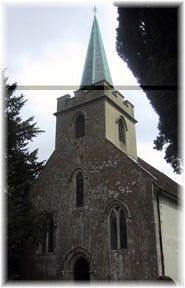
Jane and Cassandra Austen returned home and lived at the Rectory, an integral part of their community until their removal to Bath in 1800. With the older brothers marrying and moving on to careers in the Church or military, room was made available for the two of them, who shared a room all their lives, to appropriate a sitting room next door. With its two windows, fireplace and brown patterned carpet, it was here that they kept their books, piano, sewing, drawing and writing materials. It was also in these rooms that Jane first experimented with her writing and penned The History of England (By a Partial, Prejudiced and Ignorant Historian), which Cassandra, ever the artist in the family, illustrated with portraits of the various kings and queens mentioned there (who curiously resembled members of the Austen family).
Did Cassandra Austen Ever Marry?
No. Cassandra Austen never married. She was engaged to Tom Fowle, but he died before they could wed, and she remained single for the rest of her life, just as Jane did.
In about 1794, Cassandra became engaged to a former student of her father's, Thomas Fowle. This engagement carried on for some time as Tom was waiting for a family living in Shropshire to become available. Eventually, he decided to join a military expedition as an army chaplain and was sent to the Caribbean. Unfortunately, he contracted yellow fever and died there in 1797. It was some time before the Austens heard the news, and while Cassandra benefited from a legacy left in his will (she inherited Tom's savings of £1,000, which yielded about £50 per year), she never recovered from this blow and, like Jane, never married. Jane, too, came close to marriage; read about Harris Bigg-Wither's proposal.
Cassandra and Jane: Sisters and Closest Friends
Perhaps because of this loss, the sisters remained each other's closest confidant and friend. Cassandra (like Jane) frequently visited her brothers and their families, and other relatives and friends. It was the separations between herself and Jane, resulting from visits on which they did not both go, that necessitated the letters between them. The sisters wrote to each other very often while apart, and more than 100 of Jane's letters to Cassandra survive today, giving us a better picture of both Jane, the author, and the sister she loved so much.
From Bath to Chawton
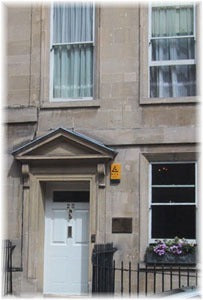
In January 1805, during their lengthy stay in Bath, the Reverend Austen died. As would have been the case for the Bennets in Pride and Prejudice if Mr Bennet had died, the income due to the remaining family (Mrs Austen and her two daughters, the only children still at home) was considerably reduced, since most of Mr Austen's income had come from clerical "livings" which lapsed with his death. So they were largely dependent on support from the Austen brothers, amounting to a total of about £450 a year.
Later in 1805, Martha Lloyd (the sister of James Austen's wife, Mary) came to live with Mrs Austen, Cassandra and Jane, after her own mother had died. In 1806 they moved from Bath, first to Clifton, and then, in autumn 1806, to Southampton. Two years later, Jane remembered (in a letter to Cassandra) with "what happy feelings of Escape!" she had left Bath. Southampton was conveniently near to the navy base of Portsmouth and the naval brothers Frank and Charles.

In 1809 Cassandra Austen, her mother, sister Jane and Martha Lloyd moved to Chawton, near Alton and Winchester, where her brother Edward provided a small house on one of his estates. This was in Hampshire, not far from her childhood home of Steventon. Life in Chawton was pleasant and not unlike that which they had led early on in Steventon, with Jane writing furiously and Cassandra overseeing the housekeeping. It was at Chawton that Jane revised Sense and Sensibility and Pride and Prejudice for publication and wrote Mansfield Park, Emma and Persuasion.
How Did Jane Austen Die?
Jane Austen died in Winchester in 1817, aged 41, with Cassandra at her side. The exact cause of her illness is still debated. In 1964 the surgeon Sir Zachary Cope suggested Addison's disease, and this remains the best-known theory, though others have proposed Hodgkin's lymphoma or another illness.
Unfortunately, the peaceful years at Chawton were not long to be enjoyed. Cassandra's beloved Jane had fallen ill in 1816. In May 1817, the sisters moved to lodgings in College Street, Winchester, so that Jane could be under a physician's care. Jane died there on Friday 18 July 1817, aged 41. Jane Austen was buried in Winchester Cathedral, near the centre of the north aisle. Discover more in The Effects of the Family's Misfortunes on Jane Austen's Death.
"It is a satisfaction to me to think that [she is] to lie in a Building she admired so much… I have lost a treasure, such a sister, such a friend as never can have been surpassed. She was the sun of my life, the gilder of every pleasure, the soother of every sorrow; I had not a thought concealed from her, and it is as if I had lost a part of myself," Cassandra later wrote.
Cassandra later wrote these words to their niece, Edward's daughter Fanny Knight.
Why Did Cassandra Austen Burn Jane's Letters?
Late in her life, in around 1843, Cassandra burned or cut up a large part of Jane's correspondence, perhaps as much as two-thirds of it. She never explained why, but it is generally believed she wanted to protect her sister's privacy and reputation, and to spare family members from Jane's sharper remarks. Around 160 of Jane's letters survive today, but none written before her twentieth birthday.
Many people blame Cassandra for the way she handled Jane Austen's papers after her death. Others see her as the prudish, stiff elder sister who looked down on Jane's flightiness and gaiety. Still others blame her for what they consider to be her unflattering watercolour portrait of her sister. In reality, most of what we know of Jane Austen today, we owe to her sister Cassandra. It was she who filled in gaps in her sister's life for generations after, leaving an oral record to supplement the written. It was she who, while she did destroy many of the letters, preserved the majority of her sister's extensive writings and, most importantly, it was she to whom the letters were written, without which we might never have known the human side of one of the world's favourite authors.
Cassandra the Artist
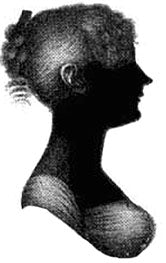
Cassandra was the artist of the family, and it is thanks to her that we know what Jane Austen looked like. As well as her playful illustrations for Jane's History of England, she painted the only two authenticated likenesses of her sister: a watercolour from 1804 showing Jane from behind, seated outdoors in a blue dress and bonnet, and an unfinished pencil and watercolour sketch of Jane's face from around 1810, now held by the National Portrait Gallery in London. The family felt the sketch was not a good likeness, but it became the basis for the engraved portrait published in 1870 that most of us picture today.
How Did Cassandra Austen Die?
Cassandra was destined to long outlive her sister Jane. She continued on at Chawton with regular visits to her brothers, nieces and nephews. In 1827 Mrs Cassandra Austen, the girls' mother, died and was buried in Chawton churchyard. Soon afterwards (in 1828) Martha Lloyd also left the household, this time to marry Cassandra's brother Frank, later Admiral Sir Francis Austen.
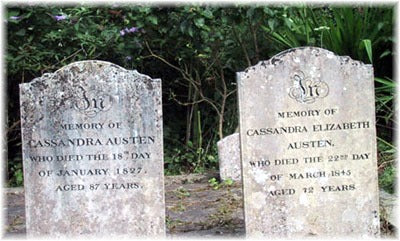
Cassandra continued living at Chawton until the end of her life. In March 1845 she travelled to Portsdown Lodge, near Portsmouth, to say goodbye to Frank before he sailed to take up a new naval post. While there she suffered a stroke and died on 22 March 1845, aged 72. She was brought home and buried beside her mother at St Nicholas' Church, Chawton.
Cassandra in Jane Austen's Novels
As with all those she knew, Jane Austen included sketches of Cassandra in her characters. Discerning readers think they can catch glimpses of her in Jane Bennet and Elinor Dashwood, beloved elder sisters who bravely bear the loss of love. Others find her in the sentiments of Mrs Croft in Persuasion, discussing engagement and marriage: "I would rather have young people settle on a small income at once, and have to struggle with a few difficulties together, than be involved in a long engagement." No doubt, with the death of her fiancé fresh in her mind, the issue was much discussed between the sisters.
Cassandra and Miss Austen
Cassandra's story reached a new audience in 2025 with Miss Austen, a four-part drama based on Gill Hornby's 2020 novel of the same name. First shown on BBC One in February 2025 and on PBS Masterpiece in the US that May, it stars Keeley Hawes as the older Cassandra, with Synnøve Karlsen as the young Cassandra and Patsy Ferran as Jane. Set in 1830, it follows Cassandra as she visits the Fowle family in search of Jane's letters, intending to destroy them, while flashbacks revisit her lost engagement to Tom Fowle and the sisters' life together. The story is fiction, but it draws closely on the real events described above. A second series, Miss Austen Returns, based on Hornby's follow-up novel The Elopement, has been announced.
Celebrate Cassandra Austen's Legacy
Cassandra Austen was far more than Jane Austen's sister. As Jane's closest companion, trusted confidante and lifelong friend, Cassandra played a vital role in preserving the letters, artwork and personal history that have shaped our understanding of one of England's greatest authors. Without her careful preservation of Jane's manuscripts, artwork and correspondence, much of what we know about Jane Austen today may have been lost forever. Her devotion ensured that future generations could continue to appreciate both Jane's literary achievements and the remarkable relationship the sisters shared.
If you'd like to explore the lives of the Austen family in greater detail, browse our collection of Jane Austen books, featuring biographies, historical guides and beautifully illustrated editions, or peruse our non-fiction reads. You can also discover thoughtful Jane Austen gifts inspired by the lives, novels and enduring legacy of the Austen family.
Frequently Asked Questions
Who was Cassandra Austen?
Cassandra Austen (1773–1845) was Jane Austen's only sister, two years her senior, and her closest friend and confidante. She was also an amateur artist who painted the only authenticated portraits of Jane.
Did Cassandra Austen ever marry?
No. Cassandra was engaged to the Rev. Tom Fowle, but he died of yellow fever in the Caribbean in 1797, and she never married.
How old was Cassandra Austen when she died?
Cassandra Austen was 72 when she died on 22 March 1845.
How did Cassandra Austen die?
She suffered a stroke while visiting her brother Frank at Portsdown Lodge, near Portsmouth, in March 1845. She is buried at St Nicholas' Church, Chawton.
Why did Cassandra Austen burn Jane's letters?
She never said, but it is widely believed she wanted to protect Jane's privacy and reputation, and to spare family members from Jane's more candid remarks.
How many siblings did Jane Austen have?
Jane Austen had seven siblings: her sister Cassandra and six brothers, James, George, Edward, Henry, Francis and Charles.
Is Miss Austen a true story?
Miss Austen is a fictional drama based on Gill Hornby's novel, but it is inspired by real events in Cassandra's life, including her engagement to Tom Fowle and her decision to destroy many of Jane's letters.
Excerpts from the Jane Austen Information Page, Jane Austen's World by Maggie Lane, and other sources.
Written by Laura Boyle


%20was%20Jane%20Austen's%20only%20sister%20and%20her%20closest%20friend.%20Two%20year...)
2 comments
In your introduction line you say there were 6 “boys”. Surely you mean 6 “girls”???
Jacquie
Until masterpiece theater’s production of Miss Austen, I did not know Jane Austen, who is a distant cousin, had brothers and a sister. I have enjoyed this article. Thank you
Henry Barber
Leave a comment
This site is protected by hCaptcha and the hCaptcha Privacy Policy and Terms of Service apply.