
Artikel: Sense and Sensibility (2026) - The Jane Austen blog review

Sense and Sensibility (2026) - The Jane Austen blog review

Autumn De Wilde’s 2020 experimental film version of Emma marked a real turning point in adapting Jane Austen; finally moving away from the polite and dignified pop culture view of the author. Stars like Anna Taylor-Joy, Bill Nighy, Mia Goth, and even Miranda Hart shamelessly bring their iconic characters to life, doing full justice to Austen’s comic genius and cruel humour. Other adaptations follow suit, excitingly taking Austen out of the box and appreciating her for the sharp writer she truly is. Georgia Oakley’s take on the author’s first published novel (with a screenplay by Diana Reid) is the latest example-this time bringing out her fascination with deep feeling and what we would today call mental health. Heroines Elinor (Daisy Edgar-Jones) and Marianne Dashwood (Esmé Creed-Miles) have just about everything thrown at them in the novel-from losing their family home to catastrophic love lives. Their unrestrained performances, coupled with some breathtaking cinematography, capture how much this all messes with their heads.
Both actresses’ adolescent energy gives a truer picture of what “sense” and “sensibility” look like in the novel. Marianne is still in her teens while Elinor is only just a young adult, meaning that it is unlikely they will have reached the mature wisdom and polished melodrama of Emma Thompson and Kate Winslet in Ang Lee’s previous adaptation. Edgar Jones’s sense is fallible, often misreading situations-from her sister’s love life to her own beloved Edward Ferrars’s (George Mackay) betrayal; it is a ruse to show she is holding everything together. On the other hand, Creed-Miles’s sensibility resembles gritty teenage angst-a depiction that believably drives her to continually put herself in harm’s way. These spins on the title qualities align with the intimate access readers get to their thought processes (particularly Elinor’s) throughout the book, with both sisters being brought to the depths of physical and mental health by what they are going through. Here, Elinor also feels much more deeply, and Marianne is much shrewder than imagined, showing embodiment of both characteristics and explaining why they break down internally and externally so much.
Stunning cinematography from Arnaud Potier adds an extra layer to their performances, capturing how aesthetic beauty exacerbates their emotional headspaces and inspires potent, sometimes dangerous sensibility. From the outset, Marianne is situated in some gorgeous stills of the wildlife around Norland Park, matching her performance to its serenity. Landscapes change throughout the picture in tandem with her mood, highlighting how nature is a part of her being and how her professions on it are not performative-something that has been argued before. The contrast of her roguish love interest Willoughby (Frank Dillane) drives this home, as he says all the right, poetic things but is always placed in the shadows-as far away from the picturesque as possible. Natural beauty does very little to move him, whereas a physical storm is enough to bring out the battle inside her.
Elinor also has her fair share of stunning views as some of her most emotional scenes with Edward are set against lakes and rugged vistas, bringing out her artist’s heart and the emotions she tries to keep bottled up. Shots of them are particularly reminiscent of those in the 2005 Pride and Prejudice (by the same studio, Working Title Films), even more richly proving that the glory of nature can bring about passionate encounters. In that particular adaptation, Joe Wright includes more down-at-heel locations like the Longbourn farmhouse, which have a homely feel and allow for emotionally probing scenes like Keira Knightley’s contemplations on the swing, but do not feel entirely convincing given the Bennet family’s status. Due to the Dashwoods’ imminently dire situation and the more rural feel of the story, Oakley and Potier can use these sorts of locations without raising too much debate about accuracy to the plot, at least.
The outwardly stereotypical bloke portrayals of Edward and Colonel Brandon (Herbert Nordrum), which miss the artificial ardour of Dillane, make them the perfect champions for male mental health. Additional scenes Reid writes for both characters strengthen their motivations from the novel and show just how much is going on beneath the surface for both characters. More time is dedicated to Elinor and Marianne getting to know them, making the love stories feel like less of an afterthought and highlighting why they all understand each other so well. Of the other female leads, Mrs Dashwood (Catríone Balfe) is the only character to really wear her heart on her sleeve, with her youthful vigour making the way she mirrors Marianne in the book feel more believable.
In order to emphasise the main characters’ depth of feeling, other members of the ensemble are utterly devoid of it-again showing Austen off as a brutal character observer. Telling, cold close-ups of Fanny Dashwood (Stacy Martin), during the opening, spoon-feed just how contriving and mercenary her character is while Lucy Steele’s (Ceara Coveney) brief, well-practised performance leaves a lasting scar on Elinor that gets her exactly where she wants to be. Even the more comic characters are completely unaware emotionally, with the hilarious, West Country Mrs Jennings (Fiona Shaw) being too self-absorbed to notice the chaos she is trailing in her wake for the Dashwood sisters, and her daughter Lady Middleton (Chloe Pirrie) only ever having anything to say about the weather.
Overall, the adaptation paces itself well to reflect its portrayal of Austen as a forward thinker, although certain parts of the first half do go on a bit longer than expected, like the Norland Park sequence, and it seems to take ages for the characters to actually reach London. When they do, however, the adaptation picks up heat, capturing the high-stakes nature of this sequence and the subsequent climax of the book. The women of this adaptation do give it edge from the innovative spins of Edgar-Jones and Creed-Miles to the scene-stealing performances of Martin and Shaw. They, alongside Oakley and Reid, would not have Austen spinning in her grave; she would be rejoicing that her deep emotional intelligence is finally being showcased.
William is an English and Related Literature Graduate from the University of York. He studied several modules which either focused on Jane Austen or included her works. He completed assignments on Austen’s engagement with eighteenth-century sentimental tropes in Sense and Sensibility, how Pride and Prejudice has been marketed through the years, and how Austen challenges marriage as the only outlet for women in Northanger Abbey and Persuasion. He has a particular fascination with how Austen’s novels come to life on stage and screen, reviewing films, plays, and musicals in his spare time. His favourite adaptations include the 1995 Pride and Prejudice mini-series, The Other Bennet Sister, Autumn De Wilde’s Emma, and the 1996 BBC version of Persuasion.
Finden Sie das perfekte Geschenk
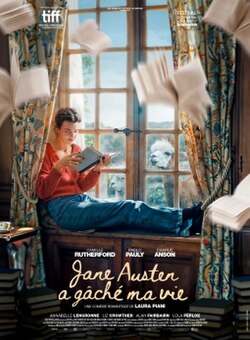
Jane Austen Wrecked My Life - Film Review
Jane Austen Wrecked My Life is a romantic comedy directed by Laura Piani from 2024. Much of its dialogue is in French, although some of it is in English. The film is about a Parisian Bookseller n...
Weiterlesen
Hinterlasse einen Kommentar
Diese Website ist durch hCaptcha geschützt und es gelten die allgemeinen Geschäftsbedingungen und Datenschutzbestimmungen von hCaptcha.